Psychopath vs Psychotic: Key Differences in Traits, Psychosis, and Meaning
Psychopath vs psychotic is a common search because the words sound similar and both are used carelessly in movies, news, and everyday arguments. In mental health language, though, they point to very different ideas. Psychopathy describes a pattern of personality traits, such as low empathy, shallow remorse, impulsivity, or manipulative interpersonal style. Psychotic describes symptoms in which a person's contact with reality is disrupted, such as hallucinations, delusions, or disorganized thinking. If you are exploring these terms for self-reflection, an educational psychopathy traits tool can offer language for patterns, but it cannot replace a qualified mental health professional.

Psychopath vs Psychotic at a Glance
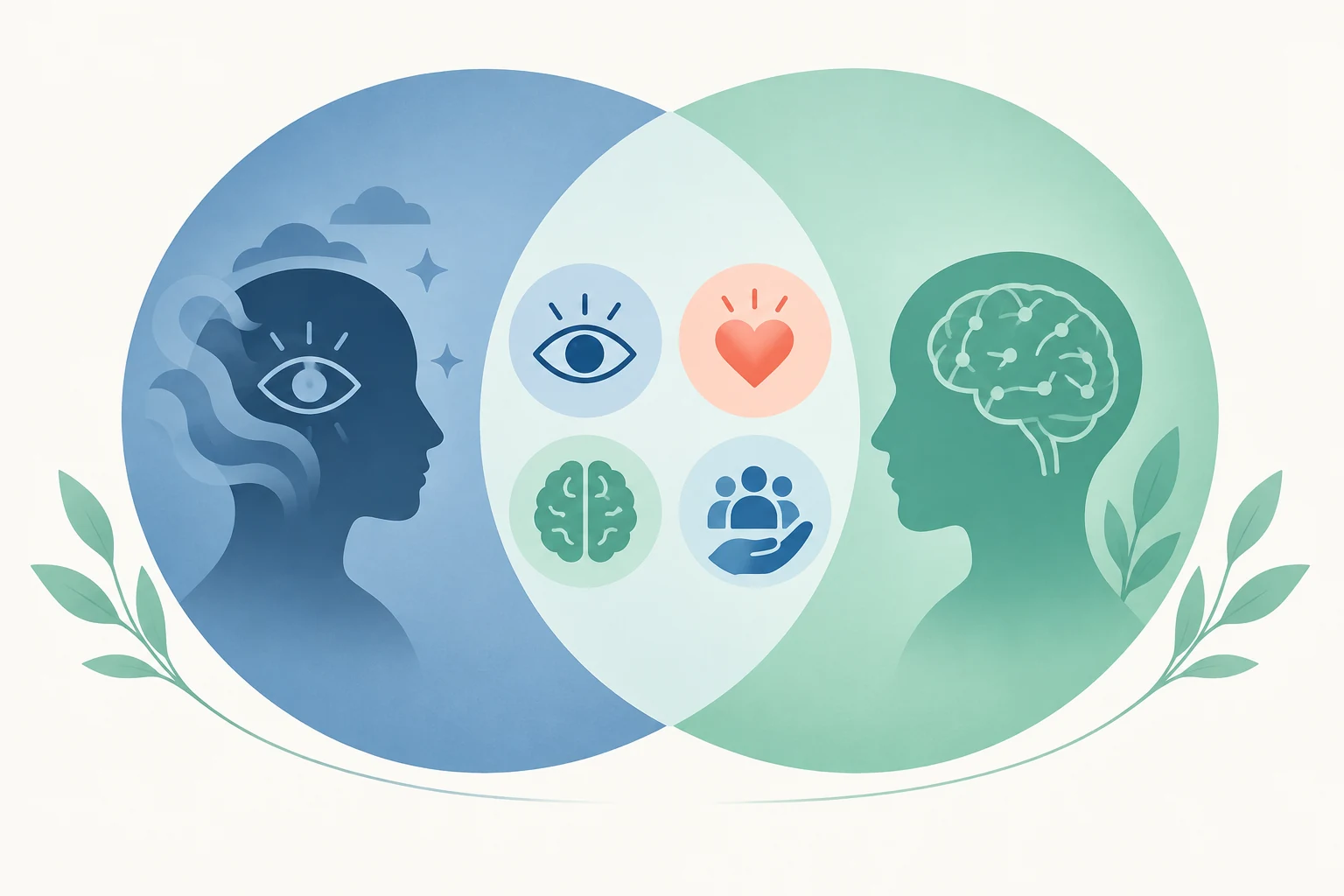
The shortest distinction is this: psychopathy is mainly about enduring interpersonal, emotional, and behavioral traits; psychosis is mainly about altered reality testing. A person with psychopathic traits may understand reality clearly while showing low remorse or exploitative behavior. A person experiencing psychotic symptoms may be frightened, confused, or convinced of something that is not real, even if they are not manipulative or callous.
| Term | Plain meaning | Main area affected | Common examples |
|---|---|---|---|
| Psychopathic | Related to psychopathy traits | Personality, emotion, behavior | Low empathy, shallow remorse, manipulativeness, impulsive risk taking |
| Psychotic | Related to psychosis | Reality testing, perception, thought organization | Hallucinations, delusions, confused speech, difficulty telling what is real |
| Sociopathic | Informal term often linked with ASPD traits | Social rule-breaking and behavior patterns | Repeated deceit, aggression, disregard for rights or boundaries |
This article uses cautious language because none of these terms should be used as casual insults. "Psychopath" and "psychotic" can both become labels that flatten a person's experience. A better approach is to ask what pattern is being discussed: personality traits, antisocial behavior, or psychotic symptoms.
What Psychopathic Means
Psychopathic means related to psychopathy, a cluster of traits often discussed in research and forensic psychology. These traits may include callousness, limited empathy, superficial charm, boldness, impulsivity, irresponsibility, and a tendency to use others for personal gain. Psychopathy is not the same thing as simply being rude, unemotional, ambitious, or angry.
In everyday search behavior, people also ask whether "psychopathic" is a word. Yes, it is. It means "of or relating to psychopathy" or showing traits commonly associated with psychopathy. Still, it is often overused. Calling someone psychopathic after one cruel action can be misleading because the term implies a broader pattern, not one bad moment.
Psychopathy also overlaps with, but is not identical to, antisocial personality disorder. ASPD is a formal clinical category focused heavily on persistent disregard for the rights of others and repeated rule-breaking behavior. Psychopathy is usually discussed as a trait profile that gives more weight to emotional and interpersonal features. Online self-assessments may help people organize reflection, but private psychopathy self-reflection should be treated as a starting point for learning, not a label.
What Psychotic Means
Psychotic means related to psychosis. Psychosis is not a personality style. It is a mental state or symptom cluster in which reality testing is significantly disrupted. A person may hear or see things others do not, hold a fixed belief that does not match reality, speak in a very disorganized way, or struggle to sort real events from imagined or misinterpreted ones.
Psychotic symptoms can appear in several contexts. They can be part of schizophrenia, bipolar disorder, severe depression, substance use, sleep deprivation, some medications, neurological conditions, or medical illnesses. That is why professional assessment matters. The visible symptom may look like "psychosis," but the cause and best support plan can vary widely.
It is also important to avoid assuming dangerousness. Psychosis can be distressing and confusing, and people experiencing it often need support, safety, and treatment. If someone seems disconnected from reality, especially if symptoms are intensifying, the practical question is not whether they are a "psychopath." The practical question is how to help them reach qualified care.

Psychopath vs Psychotic vs Sociopath
Psychopath vs psychotic vs sociopath is a useful three-way comparison because it separates three kinds of confusion.
"Psychotic" refers to symptoms involving reality testing. It says nothing by itself about empathy, morality, or personality. "Psychopathic" refers to traits often linked with low empathy, shallow remorse, and manipulative or risky behavior. "Sociopath" is an informal term, often used to describe antisocial patterns that look more impulsive, aggressive, or shaped by environment. Clinicians usually avoid diagnosing someone as a sociopath or psychopath in everyday care; they may instead assess personality traits, trauma history, substance use, mood symptoms, psychosis, or ASPD criteria.
The differences matter because the response is different. Psychotic symptoms call for mental health evaluation and, when needed, treatment for the underlying condition. Psychopathic or antisocial traits call for careful boundaries, accountability, and sometimes professional help focused on behavior, relationships, and risk. A person can also have more than one issue at the same time, so neat categories do not replace assessment.

Psychotic vs Psychosis
Psychotic vs psychosis is mostly a grammar and usage question. "Psychosis" is the noun: it names the state or symptom cluster. "Psychotic" is the adjective: it describes symptoms, episodes, disorders, or experiences related to psychosis.
For example, a clinician might discuss psychosis as a condition to evaluate, or psychotic symptoms as part of a broader disorder. Someone might experience a psychotic episode without having schizophrenia. They might also have a psychotic disorder in which symptoms are more persistent or recurring.
In plain English, use "psychosis" when naming the experience and "psychotic" when describing the symptom. Avoid using "psychotic" as a synonym for cruel, unpredictable, intense, or villainous. That casual use increases stigma and makes it harder to talk accurately about mental health.
Psychotic vs Schizophrenia
Psychotic vs schizophrenia is another common mix-up. Schizophrenia is a serious mental health condition that can include psychotic symptoms, but psychosis can occur outside schizophrenia. In schizophrenia, symptoms are often grouped into psychotic symptoms, negative symptoms, and cognitive symptoms.
Psychotic symptoms may include hallucinations, delusions, and disorganized thought. Negative symptoms may include reduced motivation, social withdrawal, or limited emotional expression. Cognitive symptoms may affect attention, memory, and decision-making. This is why schizophrenia is more than "having psychosis," and psychosis is broader than schizophrenia.
If someone has sudden hallucinations or delusional beliefs, it is not safe to guess the cause from a single symptom. Substance use, medical conditions, mood disorders, sleep disruption, trauma, or medication effects may all be relevant. A qualified professional can evaluate context, duration, risk, and support needs.
Psychotic vs Neurotic
Psychotic vs neurotic is an older distinction, but readers still search it. In broad historical use, "neurotic" referred to distress, anxiety, obsessive worry, or emotional conflict while reality testing remained intact. A person might feel extremely anxious yet still recognize that their fear may be exaggerated. "Psychotic" points to a more serious disruption in reality testing, such as a delusion or hallucination.
Modern clinicians may not rely on "neurotic" as a primary label, but the contrast can still help: anxiety and distress are not the same as psychosis. A person who worries, overthinks, or has intrusive thoughts is not automatically psychotic. Likewise, a person with psychotic symptoms is not simply "too anxious." The terms describe different experiences and require different kinds of support.
Can Psychopathic Traits and Psychosis Overlap?
Yes, psychopathic traits and psychosis can overlap in the same person, but one does not automatically cause the other. Someone may have longstanding antisocial or callous traits and also experience psychotic symptoms because of a mood disorder, substance use, sleep deprivation, neurological illness, or another mental health condition. Another person may experience psychosis with no meaningful pattern of psychopathic traits.
This is one reason online labels are risky. Behavior that looks cold from the outside may come from fear, confusion, trauma, intoxication, shame, or a deliberate lack of concern. The same outward behavior can have different roots. Good interpretation asks about pattern, context, duration, and impairment.
For personal reflection, it can help to separate trait questions from symptom questions. Trait questions ask: Do I often disregard others' feelings, manipulate, act impulsively, or feel little remorse? Symptom questions ask: Am I hearing, seeing, or believing things that others do not perceive, or am I struggling to tell what is real? These are different pathways, and the second one deserves timely professional support.
Where Pre-Workout and Pop Culture Confusion Fit
Some searchers type "psychopath vs psychotic pre workout" because supplement names, media language, or online jokes borrow mental health terms for shock value. A product name or gym phrase does not change the clinical meaning of either word. Marketing language can make the terms feel interchangeable, but they are not.
Pop culture also blurs the line. Fiction often uses "psycho," "psychotic," and "psychopath" to mean dangerous, unpredictable, or violent. That shortcut is not accurate. Psychosis is not a synonym for violence. Psychopathy is not a synonym for every harmful action. And "psycho" is best avoided in serious writing because it is vague and stigmatizing.
A Safer Way to Use These Terms
When you are trying to describe yourself, someone else, or a character, use specific language before using a label. Instead of "They are psychotic," you might say, "They seem to be hearing voices or believing something others cannot verify." Instead of "They are a psychopath," you might say, "They show a repeated pattern of manipulation, low remorse, and disregard for other people's boundaries."
Specific language is more useful and less stigmatizing. It also helps you decide what kind of response makes sense. Confusing speech, hallucinations, or delusional beliefs point toward mental health support. Repeated exploitation, coercion, or boundary violations point toward safety planning, accountability, and firmer limits.
If your interest is self-understanding, keep the tone curious rather than accusatory. You can review psychopathy-related traits as an educational exercise, while remembering that an online tool cannot evaluate psychosis, schizophrenia, crisis risk, or a full mental health history. If you or someone nearby may be losing touch with reality, seek professional help promptly. If there is immediate danger, contact local emergency services.

FAQ
What are the four types of psychopaths?
There is no single universally accepted clinical list of "four types of psychopaths." Some popular articles or older typologies divide psychopathic presentations into subtypes, but research and clinical discussions more often focus on trait dimensions, such as interpersonal style, emotional features, lifestyle impulsivity, and antisocial behavior. Treat subtype lists as educational simplifications, not formal categories.
What is the difference between psychosis and psychotic?
Psychosis is the noun for a state or symptom cluster involving disrupted reality testing. Psychotic is the adjective used to describe symptoms, episodes, or disorders related to psychosis. For example, hallucinations and delusions are psychotic symptoms, while psychosis names the broader experience being evaluated.
Can psychopaths get psychosis?
Yes. A person with psychopathic or antisocial traits can also experience psychosis, but the two concepts are separate. Psychosis may relate to conditions such as schizophrenia, bipolar disorder, severe depression, substance use, medical illness, or sleep deprivation. Co-occurrence is possible, but one label should not be used to explain everything.
What is the difference between a psychopath and psychopathy?
"Psychopathy" names the trait pattern or concept. "Psychopath" is a label sometimes applied to a person believed to show that pattern. Because person-labels can be stigmatizing and imprecise, it is usually better to say "a person with psychopathic traits" unless you are discussing a specific research or forensic context.
Is psychopathic a word?
Yes. "Psychopathic" is a word meaning related to psychopathy or showing psychopathy-related traits. The word should be used carefully because it can sound like a fixed identity label. In educational writing, "psychopathic traits" is often clearer and less stigmatizing than calling someone psychopathic.
Is psychotic the same as schizophrenic?
No. Psychotic symptoms can occur in schizophrenia, but psychosis can also occur in other mental health, medical, medication-related, or substance-related contexts. Schizophrenia includes more than psychosis, including negative and cognitive symptoms for many people.
Is a sociopath the same as a psychopath?
Not exactly. Both are informal terms often linked with antisocial traits, but they are used inconsistently. Psychopathy usually emphasizes emotional and interpersonal traits such as low empathy or shallow remorse, while sociopathy is often used for impulsive rule-breaking and antisocial behavior. Clinicians generally use more precise assessments rather than relying on either label alone.