Psychopathy Test Report Explained: How to Understand Your Score and AI Personality Insights
Introduction: Unlocking Your Psychopathy Report: From Score to Self-Awareness
Receiving a detailed psychopathy test report can be a powerful, and perhaps even unsettling, moment. You’ve taken a step toward deeper self-understanding, and now you hold a personalized map of certain personality traits. But what does it all mean? Many people find themselves asking, "What does a high score on the psychopathy report truly mean for me?" This guide is designed to help you navigate that very question. It's not just about understanding a number; it's about transforming data into a practical tool for self-awareness and personal growth. Think of your report as a starting point—a unique lens through which you can examine your own patterns of thinking, feeling, and interacting with the world. By the end of this article, you will have a clear framework for interpreting your results and turning these powerful insights into actionable steps. To begin your journey, you can always start your assessment on our homepage.
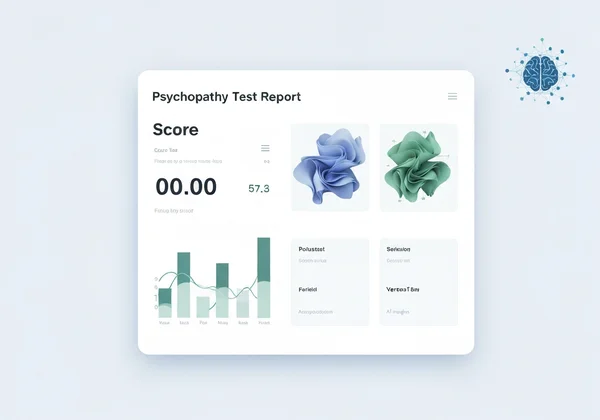
Interpreting Your Psychopathy Score and Report
The first step in leveraging your AI-powered report is to understand its structure and meaning. It's crucial to remember that this is an educational screening tool, not a clinical diagnosis. Your results place you on a spectrum of traits, offering insights rather than definitive labels. This perspective is key to using the information constructively.
Understanding Your Overall Psychopathy Score
Your overall score provides a general indication of where your responses fall on the psychopathy spectrum as measured by our scientifically-inspired assessment. It's easy to get fixated on this single number, but its true value lies in its context. A higher score doesn't label you as "good" or "bad"; it simply suggests a stronger presence of certain traits, such as a detached emotional style, impulsivity, or a distinct approach to interpersonal relationships. Conversely, a lower score indicates a weaker presence of these traits. View this score as a broad overview, an entry point that invites you to dig deeper into the more nuanced details provided in your full psychopathy test report.
Decoding Specific Traits and Sub-Scales Revealed in Your Report
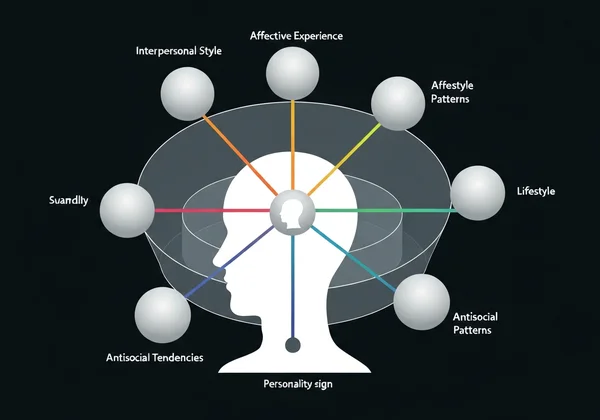
The real power of your AI-generated analysis lies in the breakdown of specific traits and sub-scales. Our test draws on established psychological models to evaluate different facets of personality. Your report will likely detail areas such as:
- Interpersonal Style: This might cover traits like charm, confidence, and manipulative tendencies. Understanding this can reveal how you present yourself to others and navigate social situations.
- Affective Experience: This scale explores your emotional depth, including empathy, guilt, and the ability to form deep connections. Insights here can illuminate your inner emotional world.
- Lifestyle Patterns: This often relates to impulsivity, thrill-seeking behavior, and a need for stimulation. This information can help you understand your decision-making processes and personal drive.
- Antisocial Tendencies: This dimension looks at behavioral controls, rule-adherence, and past conduct.
By examining each of these sub-scales, you move beyond a simple score and begin to see a multi-dimensional portrait of your personality. This detailed breakdown is the foundation for genuine self-improvement.
Translating Psychopathy Test Insights into Personal Growth
Information without action is just data. The goal of the psychopathy test insights is to empower you to make conscious choices that lead to personal growth and more fulfilling interactions. This section provides a roadmap for turning your report’s findings into a practical action plan.
Leveraging Identified Strengths for Positive Outcomes
Your report isn't just about challenges; it also highlights potential strengths. Traits often associated with the psychopathy spectrum, when channeled positively, can be highly advantageous. For instance, coolness under pressure can make you an excellent crisis manager. A knack for influential communication can lead to success in leadership or sales. Fearlessness can fuel innovation and entrepreneurship. Identify these personal strengths in your report and consider how you can apply them constructively in your career, hobbies, and personal projects. Recognizing and honing these positive aspects is a crucial part of a balanced approach to self-development.

Addressing Challenges and Areas for Development
Your report will also point to areas that may pose challenges. Perhaps it highlights a tendency toward impulsivity or difficulty with emotional connection. The key is to approach these findings with curiosity, not judgment. If your report suggests low empathy, you could consciously practice perspective-taking in daily conversations. If it indicates high impulsivity, you might implement strategies like the "24-hour rule" before making significant decisions. Addressing personality challenges starts with awareness. Use your report to identify one or two areas for focused development and set small, achievable goals to foster gradual change. For a deeper look into your own patterns, explore your traits with our free initial test.
Applying Insights to Improve Relationships and Interactions
Our personality traits have a profound impact on how we connect with others. Your report can be an invaluable tool for enhancing your interpersonal skills. If you recognize a pattern of superficial charm, you might challenge yourself to build more authentic connections based on shared values rather than influence. If you struggle to understand others' emotions, you could make a conscious effort to listen more actively and ask clarifying questions. Psychopathy and relationships is a complex topic, but your personal insights can help you identify specific behaviors to modify, leading to healthier and more stable connections with friends, family, and partners.
Beyond the Report: Sustaining Your Self-Awareness Journey
Your AI-powered report is a snapshot in time, a milestone on a longer journey of self-discovery. True growth comes from integrating these insights into your life over the long term. The goal is not to "fix" yourself but to cultivate a more profound and honest relationship with who you are.
Setting Realistic Goals and Expectations for Change
Personality is relatively stable, so change is often a slow and incremental process. Use your report to set realistic self-improvement goals. Instead of vowing to become a completely different person, focus on small behavioral adjustments. For example, if you want to be more considerate, start by actively remembering one important detail about a friend each week. Celebrate small victories and be patient with yourself. This sustainable approach is far more effective than striving for an immediate, radical transformation. The insights from the online psychopathy test are designed to guide this gradual process.
When to Consider Professional Guidance for Deeper Support
While our test is a powerful tool for self-exploration, it is not a substitute for professional medical advice or therapy. If your report raises significant concerns, or if you find that certain traits are causing you or others distress, seeking professional psychological help is a courageous and responsible next step. A qualified therapist or counselor can provide a formal assessment, offer personalized coping strategies, and guide you through deeper psychological work in a safe, confidential environment. They can help you understand the root of your behaviors and develop effective strategies for managing challenging traits.

Take the Next Step: Your Journey to Greater Self-Awareness
Your AI Psychopathy Report is more than a set of scores; it’s a catalyst for introspection and a guide for intentional living. By interpreting your results thoughtfully, translating insights into actionable steps, and committing to an ongoing journey of self-awareness, you can leverage this knowledge to enhance your life and relationships. You've already taken the first brave step by seeking to understand yourself better. Now, the path is open to continue that exploration, equipped with a deeper knowledge of your unique personality structure.
Ready to unlock your personalized insights? Take our free psychopathy test today and discover what your unique traits can reveal about you.
Frequently Asked Questions About Your AI Psychopathy Report
How accurate is my AI psychopathy test report?
Our test is designed as a scientifically-inspired screening tool that provides valuable insights based on established psychological models. While it offers a high degree of accuracy for educational and self-exploratory purposes, it is important to remember it is not a clinical diagnosis. The AI report provides a personalized, data-driven analysis of your responses to help you understand your personality traits on a deeper level.
What does a high score on the psychopathy report truly mean for me?
A high score indicates that you exhibit more of the traits associated with the psychopathy spectrum, such as emotional detachment, impulsivity, or a dominant interpersonal style. It is not a moral judgment or a life sentence. It is an opportunity to become more aware of these tendencies and consciously manage how they manifest in your daily life, focusing on leveraging strengths and addressing challenges. To understand your unique profile, get your results here.
Can the AI psychopathy report genuinely help with self-improvement?
Absolutely. Self-improvement begins with self-awareness. The AI report acts as a mirror, reflecting personality patterns you may not have been fully conscious of. By providing a structured breakdown of your strengths and challenges, it gives you a clear starting point for setting personal development goals, improving relationships, and making more informed life choices.
Is the AI psychopathy report a clinical diagnosis?
No, it is not. This is a critical distinction. Our psychopathy test and its accompanying AI report are educational and informational tools designed for self-exploration. A formal clinical diagnosis of any personality disorder can only be made by a qualified mental health professional, such as a psychiatrist or clinical psychologist, after a comprehensive in-person evaluation. If you have serious concerns, we strongly encourage you to seek professional guidance.