Psychopathy Test: Self-Assessment Guide for Recognizing Traits
Have you ever wondered if certain patterns in your thoughts, emotions, or behaviors might indicate something more? Do you sometimes feel emotionally detached, or find it difficult to form deep connections? Many people experience moments of self-reflection about these feelings. It's a natural part of being human to question why we are the way we are.
In this article, we'll offer a compassionate framework to explore these patterns without judgment or alarm. We are not here to label, but to inform. Our goal is to help you understand the difference between situational behaviors and persistent personality traits. We will discuss what psychopathic traits are, when they might warrant professional attention, and how to approach self-understanding with curiosity and care.
This journey of self-discovery can feel complex, but you don't have to start alone. An objective, science-inspired tool can provide valuable initial insights. For a structured way to begin exploring these patterns, you can start your test on our platform.

Understanding Psychopathic Traits: What to Look For
To begin a self-assessment, it's crucial to move past the dramatic portrayals of psychopathy in movies and media. In reality, psychopathic traits exist on a spectrum and are far more nuanced. They are not an all-or-nothing condition but a collection of personality characteristics that can vary in intensity from person to person. Understanding these specific traits is the first step toward gaining clarity.
Key Traits of Psychopathy: Beyond the Stereotypes
Psychopathy is a personality construct often defined by a cluster of interpersonal, affective (emotional), and behavioral traits. Stereotypes often focus on criminal behavior. However, many psychopathic traits are more subtle. They relate to a person's inner world and social interactions.
Based on foundational research in psychology, some core traits include:
- Superficial Charm and Glibness: An ability to be witty, engaging, and smooth, but in a way that can feel insincere or shallow.
- Grandiose Sense of Self-Worth: An inflated ego and a belief that one is superior to others, often leading to a sense of entitlement.
- Lack of Remorse or Guilt: An inability to feel bad about hurting others or breaking rules. They may understand intellectually that their actions were wrong but don't feel it emotionally.
- Lack of Empathy: A profound difficulty in understanding or sharing the emotional states of other people.
- Deceitful and Manipulative: A tendency to lie, con, or use others for personal gain or amusement without regret.
High-Functioning Psychopathy: Subtle Signs in Daily Life
Many individuals with significant psychopathic traits are not in prison; they live and work among us. This is often referred to as "high-functioning" or "successful" psychopathy. These individuals may use their traits to their advantage in corporate, political, or other competitive environments.
Subtle signs in daily life might include:
- Coolness Under Pressure: An almost unnerving ability to remain calm in high-stress or dangerous situations.
- Strategic Social Connections: Forming relationships that are primarily based on what the other person can offer them.
- Taking Bold Risks: A fearless and impulsive nature that can sometimes lead to great success but also to catastrophic failures.
- Blaming Others: A consistent refusal to take responsibility for their mistakes, skillfully shifting blame onto colleagues, friends, or circumstances.
Recognizing these subtle signs is a key part of an honest psychopathic traits self-assessment. It requires looking at long-term patterns rather than isolated incidents.
Emotional Detachment: Recognizing the Patterns
One of the most commonly reported inner experiences is a sense of emotional detachment. This goes beyond simply not being an "emotional person." It's a persistent pattern of feeling disconnected from one's own emotions and the emotions of others.
Recognizing the patterns of emotional detachment signs can involve asking yourself:
- Do I find it hard to identify what I'm feeling?
- Do I observe emotions in others (like sadness or joy) but not feel them myself?
- Are my emotional responses often shallow or short-lived?
- Do I feel like an actor playing a part in social situations, mimicking the expected emotional reactions?
If these questions resonate with you, it could be a sign of the affective deficits associated with psychopathy. Exploring this further can be an important step toward self-awareness. Taking a guided psychopathy test can provide a clear structure for this reflection.

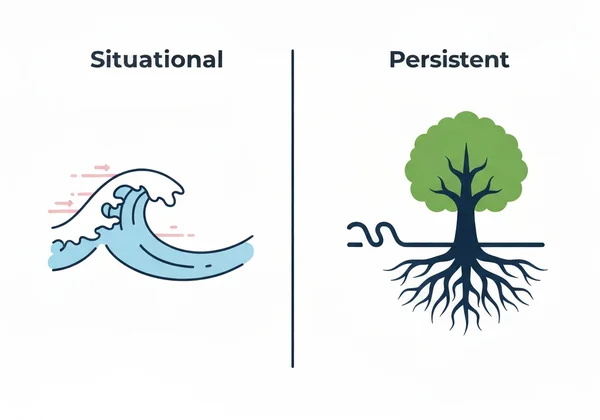
Situational vs. Persistent Traits
It is extremely important to remember that displaying one or even a few of these traits occasionally does not make someone a psychopath. Human behavior is complex and heavily influenced by context. Stress, trauma, and burnout can all cause us to act in ways that are not typical for us, including being less empathetic or more irritable. The key is to differentiate between temporary states and persistent, long-term personality patterns.
When Lack of Empathy Might Be Contextual
Everyone experiences moments of diminished empathy. For example, a doctor working in a chaotic emergency room might develop a level of emotional distance to perform their job effectively. This is a coping mechanism, not necessarily a core personality trait. Similarly, someone going through a personal crisis, like a divorce or the loss of a loved one, may have limited emotional resources to spare for others. This is a normal human reaction to overwhelming circumstances.
Identifying Persistent Patterns vs. Reactions to Circumstances
The difference lies in persistence and pervasiveness. A psychopathic trait is a part of who you are across different situations and over a long period. A situational reaction is a temporary response to a specific event.
Ask yourself:
- Duration: Have I felt or acted this way for as long as I can remember, or did it start after a specific event?
- Consistency: Does this behavior show up in all my relationships (work, family, romantic), or only with certain people or in specific contexts?
- Self-Awareness: When I act without empathy, do I later feel guilt or regret, or does it simply not register as a problem?
Reflecting on these questions can help you distinguish a stable personality pattern from a temporary state. If you are looking for a structured way to reflect on these patterns, you can try our free assessment.
Cultural and Developmental Influences on Behavior
Our culture, upbringing, and developmental experiences shape how we express emotions and interact with others. Some cultures may encourage stoicism and emotional restraint, which can be mistaken for a lack of feeling. Likewise, experiences like childhood neglect or trauma can profoundly impact emotional development and lead to behaviors that mimic psychopathic traits, such as distrust of others or emotional numbing, but stem from a different psychological root. A thorough self-assessment must take these powerful influences into account.
When to Consider Professional Help
Self-reflection is a powerful tool, but it has its limits. Online tests and articles can provide educational insights, but they are not a substitute for a professional evaluation. If your traits are causing you significant distress or negatively impacting your life and relationships, seeking professional help is a sign of strength and self-awareness.

Warning Signs That Professional Assessment Is Warranted
Deciding when to seek help for psychopathy-related concerns can be difficult. Here are some warning signs that a professional assessment may be necessary:
- Your relationships consistently fail or are filled with conflict.
- You have a history of legal trouble or difficulty adhering to social norms.
- You feel a chronic sense of emptiness, boredom, or lack of purpose.
- Your behavior has caused significant harm to others, even if you don't feel guilty about it.
- You are concerned that your lack of empathy or impulsive actions could lead to serious negative consequences for yourself or others.
If any of these resonate deeply, speaking with a qualified mental health professional is a responsible next step.
How to Approach a Mental Health Professional About Your Concerns
Bringing up these concerns can feel intimidating. Remember that mental health professionals are trained to handle these topics with non-judgmental expertise. You can start the conversation simply and directly.
For example, you could say: "I've been reflecting on my personality, and I'm concerned about some long-standing patterns I've noticed, such as a lack of empathy and a tendency to be manipulative. I'd like to understand them better." This opens the door for a productive, honest conversation.
Preparing for Your First Session
To make the most of your first session, it can be helpful to prepare beforehand. Consider jotting down notes on the specific patterns or incidents that concern you. Think about when these patterns started and how they have affected different areas of your life, such as work, family, and romantic relationships. Bringing this information can help the professional get a clearer picture and provide more effective guidance.
Self-Compassion and Personal Growth
Exploring potentially dark aspects of your personality can be challenging. It is vital to approach this journey with self-compassion rather than self-criticism. Regardless of what you discover, this path is ultimately about building self-awareness, which is the foundation for any meaningful personal growth.
Approaching Self-Discovery Without Judgment
Judging yourself for having certain thoughts or traits is counterproductive. It creates shame and prevents honest reflection. Instead, try to adopt the mindset of a curious observer. View your traits as data—information that can help you understand your internal operating system. This neutral stance allows for a more accurate and less painful self-assessment. Remember, understanding a trait is not the same as condoning harmful behavior. It is simply the first step toward managing it.
Building Self-Awareness as a Foundation for Growth
Self-awareness is the ultimate goal of this process. By understanding your unique personality structure—including both strengths and challenges—you empower yourself. This awareness allows you to anticipate your reactions, manage your impulses, and make conscious choices about how you interact with the world. Whether your traits align with the psychopathy spectrum or not, building this level of self-knowledge is an invaluable asset for living a more intentional and fulfilling life. A great place to begin this journey is with an initial assessment, which can provide a useful framework for your thoughts. You can get started here.
Your path to self-understanding begins with a single, informed step. While this article provides a guide, a structured assessment can offer personalized insights. If you are ready to explore your own traits with compassion and clarity, our scientifically-inspired evaluation is an excellent place to start. It is designed as an educational tool to foster self-awareness, not to provide a diagnosis.
Take the first step toward deeper self-knowledge today. Take our free psychopathy test to explore your personal traits and receive insights about your patterns.
Frequently Asked Questions About Psychopathic Traits and Self-Assessment
What's the difference between occasional emotional detachment and psychopathic traits?
Occasional emotional detachment is a normal human experience, often triggered by stress, fatigue, or as a coping mechanism. A psychopathic trait, however, is a persistent and pervasive pattern of emotional deficit that is stable across time and different situations. The key difference is duration and consistency.
Can taking an online test accurately tell me if I have psychopathic traits?
Online tests can be valuable educational tools for self-reflection. Our assessment at Psychopathytest.org is designed to provide you with insights into your personality based on established psychological models. However, no online psychopathy test can provide a formal clinical diagnosis. Think of it as a screening tool that can help you decide if further professional exploration is warranted. For a preliminary look at your traits, you can start your test here.
How do I know if my traits are problematic enough to seek professional help?
If your traits are causing you or others significant distress, disrupting your relationships, or leading to negative life outcomes (like job loss or legal issues), it is a strong indicator that professional help would be beneficial. A qualified mental health professional can help you understand the severity of your traits and develop strategies for management.
Are psychopathic traits always negative, or can they have some benefits?
This is a complex question. While traits like a lack of empathy and manipulativeness are socially and morally negative, other associated traits like coolness under pressure, boldness, and a focus on goals can be advantageous in certain professions, such as surgery, business leadership, or special forces. Our site offers an optional AI-powered report. This report explores how psychopathic traits can manifest as both strengths and challenges.
What should I expect when discussing concerns about my traits with a mental health professional?
You should expect a confidential, non-judgmental environment. A professional will likely conduct a comprehensive assessment, which may involve detailed interviews about your personal history, relationships, and behavior. Their goal is not to label you, but to understand your unique psychological makeup and help you find ways to improve your quality of life and relationships.