What to Do After a High Psychopathy Test Score: A Practical Guide for Understanding Your Results
Receiving a high score on a psychopathy test can be unsettling. You might feel confused, worried, or even a little curious about what it all means. What should you do with this information? Begin by giving yourself space to process these results without immediate judgment. This guide is designed to help you understand your score, process your feelings, and identify constructive next steps.
An online screening tool is a starting point, not a final destination. It offers valuable insights into certain personality traits. If you haven't yet explored your own traits, our scientifically-inspired psychopathy test can provide a confidential, preliminary assessment. This article will help you navigate what comes after you see your results.

Normalizing Your Test Results
Seeing a high score can trigger a range of emotions, from anxiety to denial. It's crucial to approach these feelings with a calm and rational mindset. The number itself is just one piece of a much larger puzzle. Let's break down why you shouldn't panic and how to process what you're feeling.
Test Scores vs. Clinical Diagnostics
The most important thing to understand is that an online psychopathy test is a screening tool, not a clinical diagnosis. Think of it like a weather forecast that suggests a chance of rain. It gives you a helpful heads-up but doesn't guarantee a downpour.
Only a qualified mental health professional can provide a formal clinical diagnosis of a personality disorder like Antisocial Personality Disorder (ASPD). This process involves comprehensive interviews, a review of personal history, and often multiple assessment tools. Our test provides an educational insight into traits associated with the psychopathy spectrum, but it does not and cannot tell you that you have a disorder.
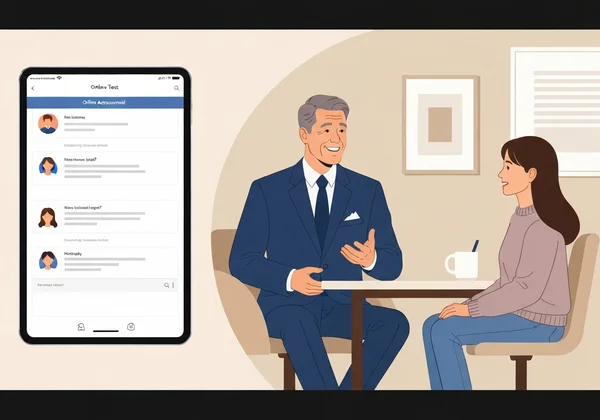
Common Emotional Reactions to High Scores
It's completely normal to have a strong emotional reaction. Some people feel a sense of alarm, wondering if they are "bad" or "broken." Others might feel a strange sense of validation, as if the score finally explains feelings of detachment or interpersonal difficulties they've experienced for years.
You might feel:
- Anxious: Worrying about what this means for your future and relationships.
- Confused: Not knowing how to interpret the results or what to do next.
- Defensive: Feeling the score is wrong or doesn't accurately represent you.
- Curious: Wanting to learn more about these traits and how they apply to your life.
Whatever you feel, acknowledge it without judgment. These reactions are part of the self-discovery process. The goal isn't to label yourself, but to use this information to gain greater self-awareness.
Interpreting Your Results with Nuance
A high score isn't a simple "yes" or "no" answer. Psychopathy exists on a spectrum, and different traits can manifest in countless ways. To truly understand your result, you need to look beyond the single number and consider the details and context.
Breaking Down Your Score Components
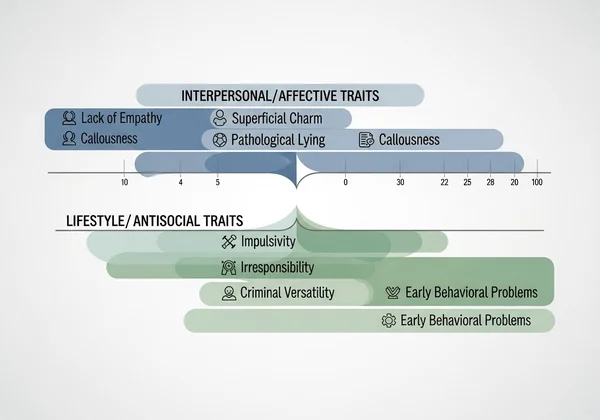
Most scientifically-inspired psychopathy tests, including ours, measure several underlying factors. While the specific components can vary, they often revolve around two main dimensions:
- Interpersonal/Affective Traits: This includes traits like a lack of empathy, shallow emotions, manipulativeness, and a grandiose sense of self-worth. A high score here might indicate you struggle to connect emotionally with others.
- Lifestyle/Antisocial Traits: This dimension covers impulsivity, a need for stimulation, irresponsibility, and a history of rule-breaking behavior. A high score here could point to a more restless and unconventional lifestyle.
Understanding which of these areas contributed most to your score is key. Someone high in interpersonal traits but low in antisocial behavior will present very differently from someone with the opposite profile. For a detailed breakdown, the AI-powered report available after our free test can offer personalized insights into your unique trait combination.
Context Matters: When High Scores Don't Equal Problems
Certain traits associated with psychopathy can be advantageous in specific environments. For example, emotional detachment, fearlessness, and a sharp focus on goals can be beneficial for surgeons, CEOs, special forces soldiers, and top athletes.
A high score doesn't automatically mean your life is destined for trouble. The critical question is whether these traits are causing significant harm to you or those around you. Are your relationships consistently failing? Are you facing legal or professional consequences for your actions? Or are you channeling these traits into a successful and productive life? The context of your life and the consequences of your behavior are far more important than the score itself.
Constructive Next Steps for Self-Exploration
Your test result is an opportunity to look inward. Rather than viewing it as a fixed label, see it as a map that highlights areas for potential growth and deeper understanding. Here are some practical steps you can take.
Journaling Prompts for Deeper Self-Insight
Writing can be a powerful tool for untangling your thoughts and feelings. Set aside some time to reflect on these prompts. Be honest with yourself—no one else needs to see your answers.
- When have I felt a lack of empathy for someone? What was the situation, and how did I react?
- Describe a time I manipulated a situation to get what I wanted. What was my motive, and what was the outcome?
- Do I get bored easily? What activities make me feel excited and engaged?
- How do my actions affect the people I care about? Have I received feedback that I am cold or distant?
- What are my biggest goals? Am I willing to cut corners or bend rules to achieve them?
This exercise can help you connect the abstract concepts from the test to real-life experiences, providing a richer understanding of your personality.

Balancing Self-Understanding with Personal Growth
Understanding your traits is the first step. The next is deciding what to do with that knowledge. You can choose to use your unique characteristics for positive ends. For instance, if you are naturally persuasive and fearless, you could become a compelling public speaker or an advocate for a cause you believe in.
If certain traits are causing problems, you can develop strategies to manage them. If you struggle with impulsivity, you can learn to pause and think through consequences before acting. For those who struggle with natural empathy, you can develop cognitive empathy. This means making an effort to understand others' perspectives intellectually, even if you don't share their emotional experience. This is about skillful self-management, not changing your fundamental nature.
When and How to Seek Professional Support
While self-exploration is valuable, there are times when professional guidance is the most responsible and effective path forward. An online test can never replace the nuanced understanding of a trained expert.
Identifying When Professional Consultation is Beneficial
Consider seeking professional help if:
- Your traits are causing significant distress in your life or the lives of others.
- You are consistently struggling with relationships, employment, or legal issues.
- You feel overwhelmed by your results and want a safe space to discuss them.
- You want to develop concrete strategies for managing difficult behaviors.
- You suspect you may have an underlying personality disorder and want a formal evaluation.
A therapist or psychologist can provide a confidential, non-judgmental environment to explore these issues in depth.
How to Approach Mental Health Professionals About Your Results
Bringing up an online test result with a professional can feel intimidating, but it can be a great starting point for a productive conversation. You can say something like:
"I took an online psychopathy screening test for self-exploration, and the results indicated I have some strong traits in this area. I'm not here for a diagnosis based on that, but I'd like to talk about some of the patterns it highlighted, like my difficulty with empathy and my impulsive behavior, because they are affecting my life."
This approach shows you are using the test as a tool for inquiry, not as a self-diagnosis. It gives the professional a clear and actionable reason for your visit.
Your Path Forward with Confidence
Receiving a high score on a psychopathy test is not a judgment—it's an invitation to understand yourself more deeply. Remember that these tests are educational tools, not clinical diagnoses. Your score is a single data point, and its meaning depends entirely on your life's context and the real-world impact of your behaviors.
Let these results guide you toward more honest introspection about your thoughts, feelings, and behaviors. By breaking down your results, journaling your experiences, and considering professional guidance when needed, you can turn this information into a powerful force for personal growth.
Interested in gaining deeper insights into your personality patterns? Our test can help you begin that journey of self-discovery. Take our free, confidential psychopathy test today and unlock a deeper level of self-awareness with our optional AI-powered analysis.
Common Questions About Psychopathy Test Results
What does a high psychopathy test score really mean?
A high score suggests you possess a significant number of traits commonly associated with the psychopathy spectrum, such as low empathy, impulsivity, or manipulativeness. It is not a clinical diagnosis but an indicator for self-reflection. The real meaning depends on how these traits manifest in your daily life.
Can I "treat" or change psychopathic traits?
Fundamental personality traits are generally stable, but the behaviors associated with them can be managed. Through therapy (like Cognitive Behavioral Therapy) and conscious effort, individuals can learn to manage impulsivity, practice cognitive empathy, and build more pro-social behaviors. It's about managing your traits, not erasing them.
Should I be concerned if my partner has a high score?
A high score alone isn't a reason to end a relationship, but it is a reason to pay close attention to behavior. Watch for serious warning signs in your partner's behavior, such as consistent manipulation, dishonesty, or emotional neglect. These issues exist independently of any test score. Communication and setting firm boundaries are essential.
How can I use my insights to improve my relationships?
Self-awareness is the key. If you know you struggle with empathy, you can make a conscious effort to listen more actively and consider others' perspectives intellectually. If you are impulsive, practice pausing before you speak or act. To learn more about your specific strengths and challenges, consider starting with our online test to get a baseline understanding.